

Choosing DIN 1.2311 for a mould or tool depends on more than the P20 label: application, plastic compound, section size, delivery hardness, and machining plan all affect the result. By the end, you will be able to match the grade to specific tooling components, compare alternatives, select plate or round stock, and write a purchase specification that protects dimensional accuracy and service life.
Key takeaways
- Use 280–325 HB P20 for ordinary moulds requiring stable machining.
- Confirm delivery hardness before planning cutting, polishing, and EDM work.
- Specify plate dimensions, round-bar diameter, inserts, geometry, and tolerances.
- Choose another steel when wear, corrosion, or high-temperature strength dominates.
Where DIN 1.2311 Fits in Gurugram Tooling Work
At approximately 280–325 HB, or 29–34 HRC, DIN 1.2311 is a practical fit for ordinary mould manufacture. Its pre-hardened condition lets many tools move from rough machining to finish machining without a separate hardening cycle, reducing quench distortion and dimensional movement after final machining.
DIN 1.2311 applications include injection mould bases, cavity and core plates, mould frames, cavity blocks, inserts, and slides. Gurugram tooling manufacturers can also use it for low-to-medium-volume production tools handling non-corrosive plastics, where machinability, toughness, polishability, and cost matter more than maximum wear or corrosion resistance.
| Tooling use | Why 1.2311 fits | Watch point |
|---|---|---|
| Injection mould bases and frames | Machines efficiently in large rectangular sections | Specify delivery hardness and dimensions |
| Cavity and core plates, blocks, and inserts | Supports general-purpose mould geometry and polishing | Abrasive plastics can wear details faster |
| Slides and low-to-medium-volume tools | Pre-hardness avoids a separate quench cycle | Do not assume suitability for corrosive plastics |
DIN 1.2311 is a European steel number commonly associated with 40CrMnMo7. P20 is an ASTM A681 designation, not a precise chemical equivalent, so the trade name alone does not establish chemistry or hardness. Compare the mill certificate, heat number, and tested delivery condition before machining.
How Delivery Hardness Changes Machining and Finishing
1. Verify the mill certificate, supplied hardness, heat number, and representative test location before setting cutting speed, feed, or tool grade. “P20” does not guarantee one hardness; 1.2311 pre-hardened steel may vary between plates and through thick sections. Request a hardness map for large blocks, thick plates, and deep-cavity work.
2. Leave a controlled P20 machining allowance for roughing, then remove material in balanced passes from opposite faces. Thick sections and deep cavities can release residual stress, causing bowing, wall movement, or cavity distortion.
For precision cavities, apply mould steel stress relieving at about 550–600 °C after rough machining, with slow cooling; confirm the cycle against section thickness and the producer’s instructions.
3. Use rigid tooling, coolant suited to the operation, and conservative feeds for drilling and tapping P20 steel. Clear chips from deep holes, use suitable tap geometry, and avoid forcing a tap when alignment or hardness changes. Let the rough-machined tool stabilise before finish machining, especially at shut-offs, slides, and polished cavity surfaces.
4. Harden and temper only when the required wear or strength exceeds the supplied condition and the cycle is agreed before purchase. Quenching adds distortion, sharp-corner cracking, dimensional change, and lower machinability, removing much of the pre-hardened advantage.
5. Weld repairs require preheating, compatible filler, controlled interpass temperature, slow cooling, and post-weld stress relief. Clean steelmaking, low inclusions, and homogeneous structure support polishing; overheated or smeared milling surfaces trap defects and spoil high-gloss mould finishes.
Choosing Plate, Round Bar, Inserts, and Tool Geometry
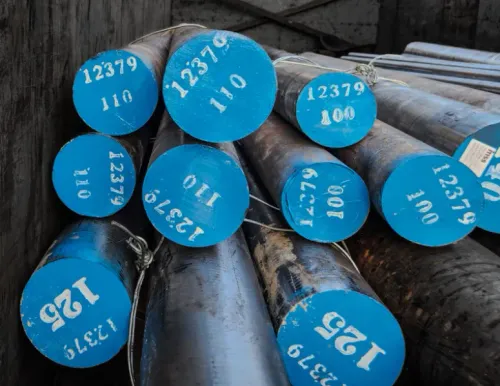
Choose plate or block stock for mould bases, cavity plates, core plates, frames, and large rectangular inserts when the geometry is predominantly flat and the machining allowance can be controlled. Choose round bar when the final shape follows the bar axis, as with cylindrical inserts, guide-related components, punches, and sleeves.
| Stock form | Best-fit components | Selection check |
|---|---|---|
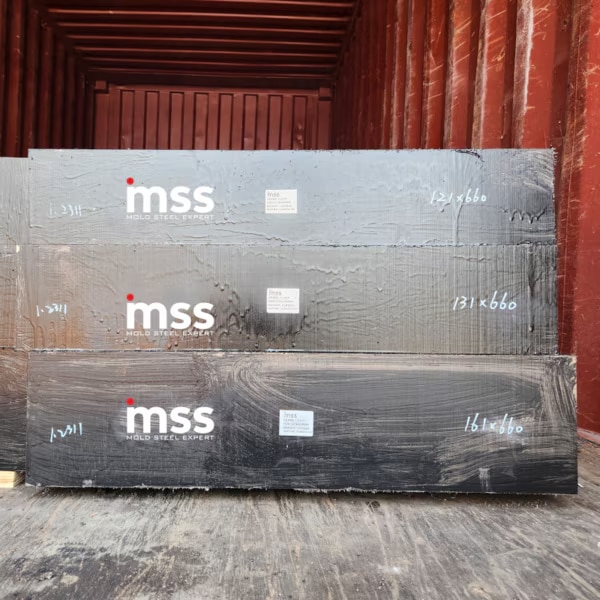
| Plate or block | Mould cavity blocks, steel inserts for injection moulds, frames, cavity and core plates | Leave enough material to remove scale, decarburised or damaged surface, and machining distortion |
| Round bar | Cylindrical inserts, punches, sleeves, guide-related parts | Match diameter and length to section thickness, grain direction, and the required finished geometry |
The P20 steel plate versus round bar decision also depends on inclusion orientation and the material removed from each face. Do not order only the finished dimension: include cutting allowance, surface removal, and extra stock for stress relief after roughing.
For large cavities and thick plates, request a hardness map or representative test location; require ultrasonic testing of mould steel when section size and tool criticality justify it, then plan stress relief because cavity removal can release residual stresses.
For Gurugram fabrication, wrap cut blocks and bright-machined surfaces in VCI paper or film, apply temporary rust preventive, use sealed packaging, and store indoors in a dry area. Humid and monsoon air can flash-rust an unprotected surface before machining begins.
When Another Mould or Tool Steel Is the Better Choice
Select another grade when mould size, wear, corrosion, or temperature exceeds what 1.2311 can handle economically. For ordinary non-corrosive plastics, 1.2311 remains a practical balance of machinability, toughness, polishability, and cost.
| Option | What changes | When it applies |
|---|---|---|
| DIN 1.2738/P20+Ni | Better through-hardness and hardness uniformity | Large moulds and thicker sections where the core must resist uneven softening |
| P20 High Hard steel | Greater wear resistance than standard pre-hardened 1.2311 | Abrasive compounds, high-contact details, and longer production runs |
| DIN 1.2316 corrosion-resistant mould steel | High-chromium corrosion resistance | PVC, halogenated or flame-retardant plastics, humid service, and long storage |
| H13 hot-work tool steel | Retains strength during repeated heating and cooling | Elevated-temperature die-casting and comparable hot-work service |
The moulding compound and production plan can expose the limit first. Glass-filled, mineral-filled, abrasive, or high-volume production can wear gates, shut-offs, slides, and cavity details faster than expected.
Do not automatically upgrade the whole mould. Evaluate a higher-wear grade, surface treatment, or locally hardened insert for the damaged region; this often controls cost and machining time better than replacing every plate.
Use DIN 1.2738 versus 1.2311 as a section-size decision, not a trade-name decision. Choose H13 hot-work tool steel for heat, and choose stainless 1.2316 when corrosion matters. 1.2311 is not a universal choice for maximum wear, corrosion resistance, or hot service.
What to Put on a Gurugram Steel Purchase Order
A quotation stating only “P20” leaves the chemistry, cleanliness, hardness, and traceability undefined. Reject it when your mould requires controlled steel quality; P20 is an ASTM A681 designation, not proof of DIN 1.2311 equivalence.
Specify these purchase-order controls:
- Exact steel number and standard: DIN 1.2311, 40CrMnMo7, and the agreed standard; include mill chemistry limits.
- P20 steel heat number, traceable from each cut piece to the producer’s records.
- Delivery hardness, such as 280–325 HB, plus a mould steel hardness report naming the test method and representative test location or hardness map.
- Finished length, width, and thickness; thickness tolerance; and cutting allowance for machining.
- Surface condition, including scale-free or machined faces and protection against rust.
- Ultrasonic testing to an agreed acceptance class for thick blocks or critical cavities.
- Whether the steel is vacuum-degassed or remelted, if cleanliness demands it.
- A DIN 1.2311 mill test certificate covering chemistry, heat number, hardness, dimensions, and test results.
Compare local supply around Gurugram, Manesar, Bawal, and Bhiwadi using evidence rather than proximity.
| Supplier check | Evidence to request | Risk controlled |
|---|---|---|
| Certificate | Mill certificate and heat traceability | Wrong grade or mixed stock |
| Cutting | Cut-to-size tool steel Gurugram allowance | Insufficient machining stock |
| Packing | VCI film, rust preventive, sealed packaging | Flash rust |
| Hardness | Map or signed test result | Uneven machining response |
Milano Special Steel, Plastic Mold Steel Expert belongs on your comparison list only if it supplies these documents and controls, not because of its name.
Related products
 | P20 STEEL/ DIN 1.2311 P20 STEEL DIN 1.2311 Grade P20 Steel Supplier in India - Milano Special Steel Introduction Milano Special Steel is a leading supplier of high-quality DIN... View product → |
 | P20 STEEL/ DIN 1.2311 P20 STEEL DIN 1.2311 Plastic Mould Steel Plates DIN 1.2311 Plastic Mould Steel Milano Special Steel, located in Gurugram, Haryana, near Manesar, Bawal, and Bhiwadi, is a renowned supplier of... View product → |
Frequently asked questions
Where does DIN 1.2311 fit in Gurugram tooling work?
DIN 1.2311 suits ordinary mould manufacture, including mould bases, cavities, cores, and industrial tooling that benefits from pre-hardened steel.
How does delivery hardness affect machining and finishing?
At approximately 280–325 HB, or 29–34 HRC, DIN 1.2311 supports machining without a separate hardening cycle. Confirm the supplied hardness because cutting tools, feeds, polishing effort, and dimensional control depend on it.
How should you choose between plate, round bar, inserts, and tool geometry?
Match the stock form to the component: use plate for mould halves and blocks, round bar for cylindrical tools, and inserts when replacing a local wear area or simplifying machining. Leave sufficient allowance for roughing, finishing, and final fitting.
When is another mould or tool steel better than DIN 1.2311?
Select another grade when the tool faces severe abrasive wear, corrosive plastics, repeated high-temperature service, or unusually high polish requirements. A corrosion-resistant, harder, or hot-work steel can better match those conditions.
What should you put on a Gurugram steel purchase order?
State DIN 1.2311 or P20 grade, stock form, finished dimensions, machining allowance, delivery hardness, flatness or diameter tolerance, quantity, test documents, heat number, and delivery location.
Related product
 | P20 HIGH HARD STEEL P20 High Hard Steel is a popular grade of tool steel that is commonly used in the manufacturing of molds, dies, and other high-performance components... View product → |