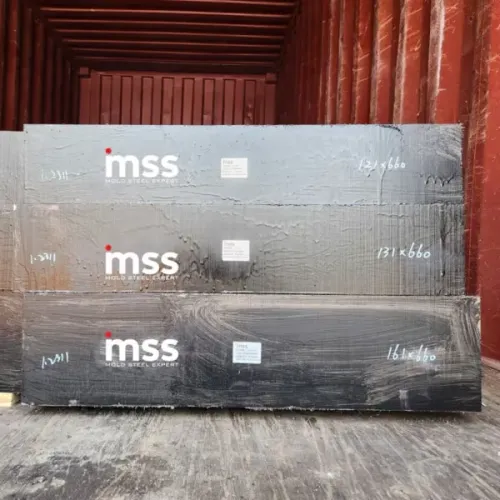
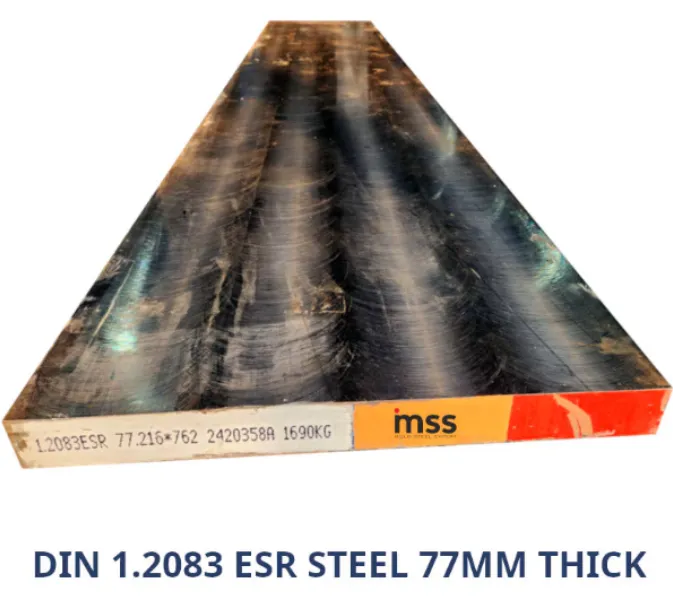
Selecting mould steel is rarely just a matter of choosing a grade from a catalogue. Tool room engineers and plastic injection moulding manufacturers need to consider surface finish, corrosion exposure, machining requirements, mould life, maintenance conditions, and the type of polymer being processed. For applications where cleanliness and surface quality are important, DIN 1.2083 ESR Material is frequently evaluated as a mould steel option.
For manufacturers and engineering businesses in Manesar, Haryana, understanding what ESR processing contributes to the material can help procurement and technical teams make better sourcing decisions.
What Does ESR Mean in Mould Steel?
ESR stands for Electroslag Remelting. It is a secondary refining process used to improve steel cleanliness and consistency. Rather than treating ESR as simply an additional label, buyers should understand why the process can matter in demanding tooling applications.
ESR processing is generally associated with:
- Improved steel cleanliness
- Reduced non-metallic inclusions
- Better structural uniformity
- More consistent polishing behaviour
- Improved suitability for precision mould surfaces
These characteristics can become particularly relevant when a mould requires a refined finish or when surface imperfections could affect the appearance of the finished plastic component.
Where Is DIN 1.2083 ESR Material Commonly Considered?
This grade is commonly associated with plastic mould applications requiring a combination of wear performance, corrosion resistance, and good polishability.
Potential applications include moulds used for:
- Medical and laboratory plastic components
- Household plastic products
- Packaging components
- Transparent or high-finish moulded parts
- Engineering plastic components
- Moulds exposed to humid operating or storage conditions
- Components manufactured from plastics that can create challenging processing environments
The final steel selection should still be based on the mould design, polymer, expected production volume, heat treatment plan, and required surface condition.
Why Surface Quality Matters
A highly finished plastic product starts with a properly prepared mould surface. Steel cleanliness can influence polishing results, especially where mirror-like or visually demanding surfaces are required.
For a tool room, inconsistent material can mean additional polishing effort or difficulty achieving uniform results across the mould surface. This is one reason ESR variants are often considered for technically demanding moulds rather than selecting material solely according to price per kilogram.
Corrosion Resistance Is Another Selection Factor
Plastic moulds can encounter moisture, condensation, cooling water, storage humidity, and process-related contaminants. Some polymers may also create conditions that make corrosion resistance more important.
Gurugram and the wider Haryana industrial region support automotive, plastics, electronics, engineering, and component manufacturing operations. In these production environments, mould downtime caused by surface deterioration can affect schedules far beyond the tool room itself.
Choosing a corrosion-resistant mould steel can therefore be part of a broader maintenance and productivity strategy.
What Should Buyers Check Before Ordering?
A material designation alone is not enough for responsible industrial procurement. Buyers should define the actual requirement before requesting a quotation.
Important details include:
- Required dimensions
- Plate, block, or flat requirement
- Machining allowance
- Required material condition
- Applicable material specification
- ESR requirement
- Inspection or certification requirement
- Quantity
- Intended mould application
Technical teams should also verify whether the requested dimensions are compatible with the planned machining and heat treatment processes.
ESR Material Should Be Selected for the Application
Not every mould automatically needs ESR steel. For relatively straightforward tooling, another material may provide an appropriate balance between performance and project cost. ESR becomes more relevant when mould quality, polishing behaviour, cleanliness, and consistency justify the additional material specification.
This distinction is important for procurement managers. Selecting the highest specification without considering the application can increase tooling cost unnecessarily, while selecting material only on initial price can create problems during machining, finishing, or production.
For industrial buyers in Gurugram, evaluating DIN 1.2083 ESR Material through the complete mould manufacturing process provides a more useful basis for selection. Steel quality should support what happens in the tool room as well as the conditions the finished mould will face during production.
Keywords