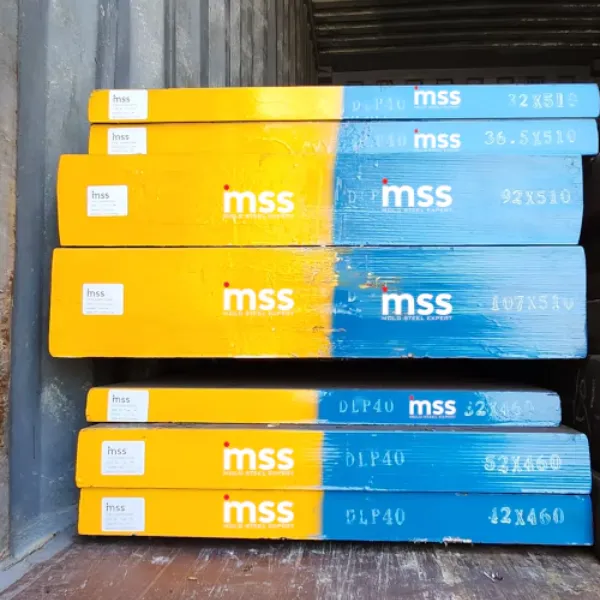
A purchase order for tool or mould steel can look straightforward: grade, dimensions, quantity, and delivery date. In practice, incomplete specifications are one of the easiest ways to create procurement problems. When buying 1.2085 Steel, industrial buyers should understand what information needs to be confirmed before material reaches the tool room.
This is especially relevant in Punjab, where automotive suppliers, plastic processors, tool rooms, and engineering companies frequently operate against tightly coordinated manufacturing schedules.
Start With the Drawing and Application
The steel grade should never be considered separately from the component.
Ask what the material will become. Is it intended for a mould plate, supporting component, insert, or another tooling part? Will it encounter moisture? What machining operations are planned? Are there specific dimensional or surface requirements?
These questions help procurement teams translate a simple material request into a properly defined purchase requirement.
Confirm the Exact Material Designation
Similar-looking material names can create confusion in industrial purchasing. Internal company descriptions, DIN references, trade terminology, and supplier descriptions may not always be written in the same format.
Before issuing an order, verify the required standard and designation against the approved drawing, bill of materials, or engineering specification.
Substitution should not be based only on a supplier saying that two grades are “similar.” The engineering team should evaluate whether the proposed alternative satisfies the actual application requirements.
Dimensions Need More Attention Than They Receive
Ordering exactly the finished component dimensions may leave insufficient stock for machining or surface preparation.
Tool room engineers should specify whether dimensions refer to:
- Finished component size
- Saw-cut size
- Machining size
- Minimum usable size
Appropriate machining allowance depends on the component and manufacturing route. Communicating this clearly helps prevent shortages after facing, milling, grinding, or other operations.
Check Material Condition
Material condition affects what happens next in manufacturing.
Before ordering, establish whether the steel is required in a specific supplied condition and whether additional processing will take place after machining. Toolmakers should align the purchase specification with the planned production route rather than making assumptions after material has arrived.
Documentation Matters in B2B Procurement
Traceability becomes particularly valuable when a company produces repeat tools, maintains customer-approved specifications, or supplies components to quality-controlled industries.
Depending on project requirements, buyers may need relevant material documentation and identification.
Good receiving practice includes checking:
- Grade identification
- Dimensions
- Quantity
- Material condition
- Required documentation
- Physical condition of supplied material
- Purchase order conformity
Any discrepancy is easier to resolve before machining begins.
Consider the Real Cost of a Purchasing Error
The cheapest quotation does not necessarily produce the lowest tooling cost.
If incorrectly specified steel reaches machining, the resulting costs may include rescheduling, machine idle time, repeat material procurement, lost machining hours, and delayed tool assembly.
For industrial operations across Gurugram and Haryana, where tool rooms may support time-sensitive production programmes, these indirect costs can exceed a relatively small difference in steel purchase price.
Build Better Enquiries
A useful RFQ for 1.2085 Steel should include the grade, applicable specification, dimensions, quantity, required condition, documentation expectations, and delivery requirement.
For repeat purchasing, maintaining an approved material specification can make future procurement more consistent.
The strongest steel purchasing process connects engineering and procurement rather than treating them as separate functions. Engineers define what the component requires, while procurement ensures that the commercial offer matches those requirements.
When those responsibilities are aligned, material reaches the tool room with fewer unanswered questions and a much lower risk of avoidable rework.
Keywords