
The success of a plastic injection moulding project depends on several factors, but one of the most important is selecting the right Plastic Mould Steel. A well-chosen steel grade improves mould durability, maintains dimensional accuracy, reduces maintenance, and helps manufacturers achieve consistent product quality over long production cycles.
With multiple mould steel grades available, procurement managers, tool room engineers, and industrial buyers often face the challenge of identifying the material best suited to their production requirements. Understanding the key selection criteria can prevent costly mistakes and improve long-term manufacturing performance.
Why Plastic Mould Steel Selection Matters
A mould represents a significant investment in any manufacturing process. Using an unsuitable steel grade can lead to frequent repairs, surface defects, poor polishing performance, premature wear, and unexpected downtime.
Selecting the appropriate plastic mould steel helps manufacturers:
- Extend mould service life
- Improve production consistency
- Reduce maintenance expenses
- Achieve superior product finish
- Increase manufacturing efficiency
- Lower overall tooling costs
Rather than focusing solely on purchase price, businesses should evaluate the total lifecycle value of the mould.
Understand Your Production Requirements
Every mould performs under different operating conditions. Before selecting a steel grade, manufacturers should clearly define their production needs.
Consider factors such as:
- Type of plastic material
- Annual production volume
- Product complexity
- Surface finish expectations
- Cycle time requirements
- Cooling system design
- Mould size
- Maintenance schedule
A mould designed for a few thousand cycles requires different material characteristics than one expected to produce millions of components.
Match the Steel to the Application
Different mould steels are engineered for different manufacturing environments.
For example:
- P20 and P20HH Steel are suitable for general plastic injection moulds and medium-volume production.
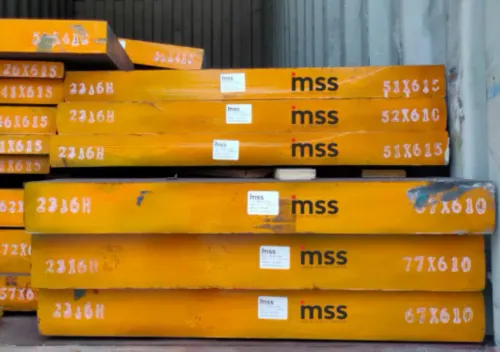
- DIN 1.2738 Plastic Mould Steel performs well in large moulds that require consistent hardness throughout thick sections.
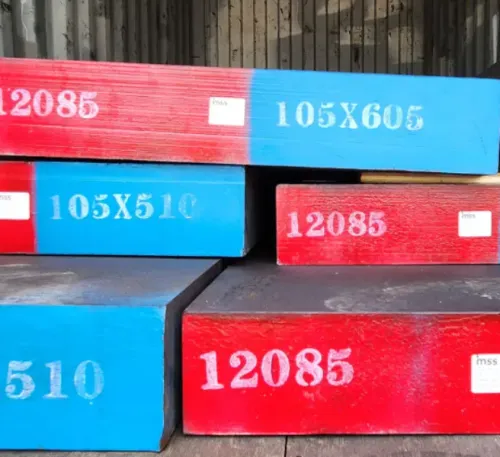
- DIN 1.2085 Tool Steel is ideal where corrosion resistance is essential.
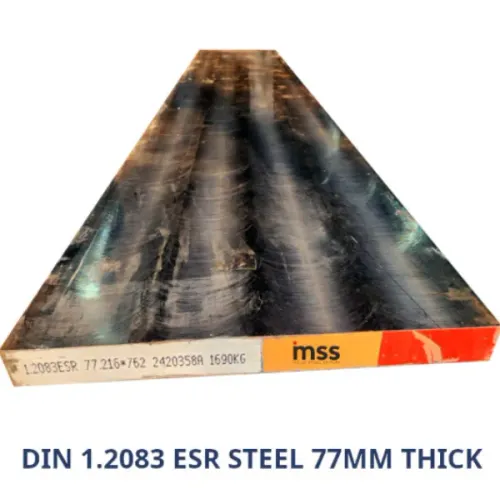
- DIN 1.2083 ESR Steel and Stavax ESR Steel are preferred for high-gloss, medical, food-grade, and optical applications.
Matching the material to the application improves both mould performance and production efficiency.
Evaluate Wear Resistance
Continuous production causes mould cavities and moving components to wear over time.
High wear resistance helps:
- Maintain dimensional accuracy
- Reduce component replacement
- Improve product consistency
- Extend mould operating life
Manufacturers processing abrasive engineering plastics should prioritise steels designed for superior wear performance.
Consider Corrosion Resistance
Some plastics release corrosive gases during moulding, while humid production environments may also contribute to rust formation.
Corrosion-resistant mould steels are recommended when manufacturing:
- Medical products
- Food packaging
- Cosmetic containers
- PVC components
- Transparent plastic parts
Choosing corrosion-resistant materials reduces maintenance and protects critical mould surfaces.
Surface Finish Requirements Matter
Not every product requires a mirror-like finish, but industries producing premium plastic components often demand exceptional surface quality.
Applications requiring high polishability include:
- Optical products
- Automotive interior trims
- Cosmetic packaging
- Consumer electronics
- Medical equipment
Premium ESR mould steels generally deliver better polishing performance due to their cleaner microstructure.
Don't Ignore Machinability
Good machinability shortens manufacturing time and reduces tooling costs during mould production.
Steel with excellent machinability offers:
- Faster cutting speeds
- Better machining accuracy
- Lower tool wear
- Reduced manufacturing costs
- Improved productivity
This becomes particularly important for large or complex mould designs.
Work with an Experienced Material Supplier
The quality of mould steel depends not only on the grade but also on manufacturing consistency.
Reliable suppliers provide:
- Certified material quality
- Uniform hardness
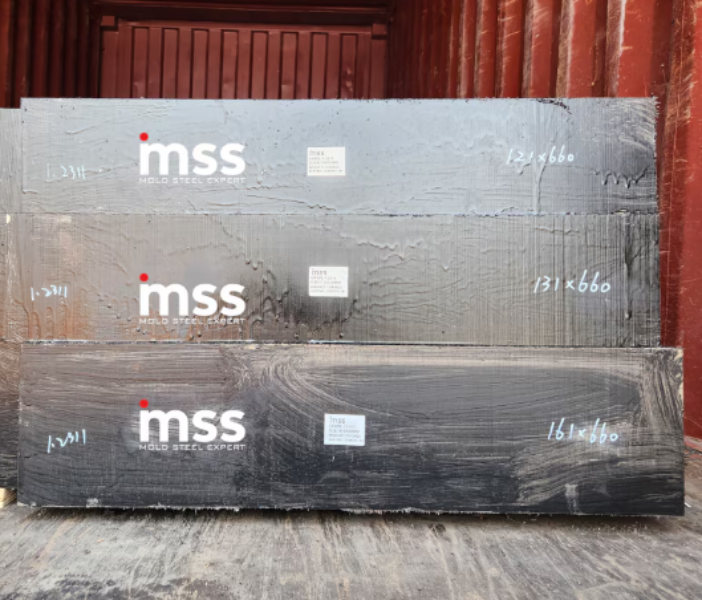
- Precision-cut steel blocks
- Batch traceability
- Technical guidance
- Reliable inventory
- On-time delivery
These factors reduce procurement risks and help manufacturers maintain uninterrupted production schedules.
Manufacturers in Chandigarh increasingly rely on experienced suppliers such as Milano Special Steel, Plastic Mold Steel Expert for premium tool steels and plastic mould steels that meet international quality expectations while supporting demanding industrial applications.
Why This Matters for Manufacturers in Chandigarh
Chandigarh has become one of Haryana's fastest-growing manufacturing hubs, serving industries including automotive, engineering, electronics, medical devices, and consumer products. These sectors require moulds capable of maintaining precision over extended production runs while minimising maintenance costs.
Selecting the right plastic mould steel allows businesses to improve operational efficiency, reduce downtime, and achieve more predictable manufacturing outcomes.
Making a Smarter Investment in Plastic Mould Steel
Choosing plastic mould steel should never be based on hardness or price alone. The ideal material depends on production volume, product requirements, mould complexity, maintenance expectations, and the operating environment.
For procurement managers, industrial buyers, and tool room engineers in Chandigarh and across Haryana, investing time in selecting the appropriate mould steel can deliver substantial long-term benefits. High-quality mould steel from a dependable supplier helps extend tool life, improve product quality, reduce maintenance, and support consistent manufacturing performance in today's competitive industrial landscape.