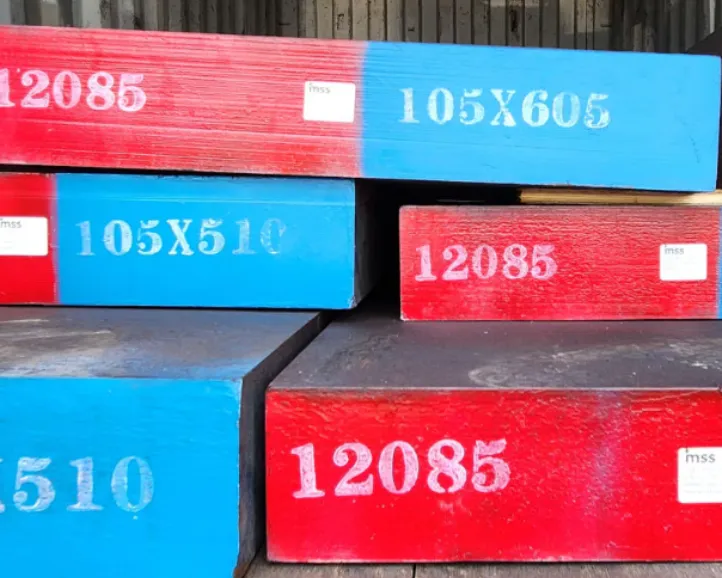
Tooling materials often have to satisfy several requirements at the same time. A mould component may need dependable machinability, dimensional reliability, adequate corrosion resistance, and compatibility with the overall tool construction. 1.2085 Mould Steel is one of the grades considered for particular mould-making requirements where these characteristics are relevant.
For tool rooms and plastic component manufacturers in Delhi, understanding where the grade fits is more useful than selecting it simply because it appears on a drawing or previous bill of materials.
Understanding the Role of 1.2085
Mould construction involves more than the visible cavity and core. Mould bases, supporting components, plates, inserts, and other structural elements all operate under different conditions.
A steel grade suitable for one component may not necessarily be the best choice for another.
1.2085 is generally considered in mould-making environments where corrosion resistance and machining practicality are important considerations. The actual suitability depends on component design, working conditions, required properties, and the applicable technical specification.
Why Corrosion Conditions Matter
A mould can encounter corrosion risks at several stages of its working life.
These can include:
- Condensation during production
- Humid storage
- Contact with cooling systems
- Process residues
- Extended periods between production runs
- Working environments where routine maintenance is difficult
Corrosion is not merely a cosmetic problem. Surface deterioration can make maintenance more demanding and may eventually affect dimensional surfaces or moving interfaces.
This makes the operating environment an important part of material selection.
Machinability Influences Tool Room Productivity
Material cost is only one part of mould manufacturing cost. A tool room also spends time and resources on cutting, drilling, milling, fitting, finishing, and assembly.
A material that matches the intended machining process can help a tool room plan production more efficiently. Conversely, selecting a steel without considering its machining characteristics can create avoidable difficulties.
Before choosing the grade, engineers should assess:
- Component geometry
- Hole and pocket requirements
- Milling operations
- Surface finish expectations
- Dimensional tolerances
- Subsequent treatment requirements
This is especially important for Gurugram manufacturers handling automotive, consumer product, electrical, and engineering plastic tooling, where delivery schedules can be closely connected to production launches.
Not Every Mould Component Needs the Same Steel
A common mistake is specifying one material throughout an entire mould without examining how individual components function.
Cavity inserts may prioritise polishing or wear performance. Structural plates may have different requirements. Components exposed to moisture may place greater emphasis on corrosion behaviour.
Material selection becomes more economical when each steel grade is matched to its actual job.
Information Buyers Should Put on an Enquiry
A technically complete enquiry makes supplier evaluation easier and reduces the possibility of receiving quotations for materials that do not match the requirement.
Procurement teams should communicate:
- Grade designation
- Required size
- Quantity
- Material form
- Required condition
- Machining allowance if applicable
- Certification requirements
- End application
- Delivery location
If the material is being purchased as an alternative to another grade, that should also be clearly communicated so the technical requirements can be reviewed rather than assuming equivalence.
Look Beyond the Grade Name
Two offers carrying the same general grade description should not automatically be treated as identical. Material condition, dimensions, documentation, processing route, and supplier traceability can all influence whether the steel is appropriate for the job.
For Haryana-based industrial buyers, this becomes particularly important when material must move quickly from procurement into machining.
1.2085 Mould Steel should therefore be evaluated as part of the complete tooling requirement. A well-defined specification gives engineers, buyers, and suppliers a common technical basis, helping the selected material support both mould construction and long-term production requirements.
Keywords