
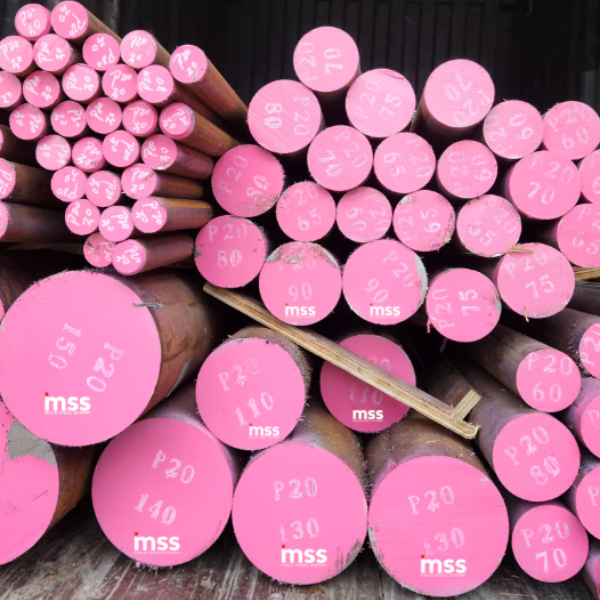
Manufacturing large plastic moulds requires more than precise machining and advanced design. The choice of mould steel plays a significant role in determining production efficiency, mould lifespan, and the quality of finished components. DIN 1.2738 Plastic Mould Steel is widely recognised for its excellent toughness, uniform hardness, and superior performance in large mould applications, making it a preferred material across several industries.
For manufacturers in Ghaziabad and across Haryana, understanding the capabilities of DIN 1.2738 Plastic Mould Steel can help improve tooling performance while reducing maintenance and operational costs.
What Is DIN 1.2738 Plastic Mould Steel?
DIN 1.2738 is a nickel-alloyed, pre-hardened plastic mould steel developed for medium to large moulds that require excellent toughness and consistent hardness throughout the material. The addition of nickel enhances its mechanical strength and improves hardness uniformity, particularly in larger steel blocks.
Because it is supplied in a pre-hardened condition, manufacturers can reduce machining time and avoid the distortion often associated with post-machining heat treatment.
Key Features That Make DIN 1.2738 Stand Out
This grade offers a combination of properties that make it suitable for demanding mould manufacturing.
Its primary advantages include:
- Excellent toughness
- Uniform hardness across large sections
- Good machinability
- High polishability
- Better wear resistance than many conventional mould steels
- Good dimensional stability
- Suitable for textured mould surfaces
- Reliable performance during continuous production
These characteristics contribute to longer mould life and improved consistency in manufactured plastic components.
Typical Applications
DIN 1.2738 Plastic Mould Steel is widely used in industries producing large moulded products with demanding quality requirements.
Common applications include:
- Automotive bumper moulds
- Dashboard moulds
- Interior plastic component moulds
- Appliance housing moulds
- Industrial container moulds
- Packaging moulds
- Crate and pallet moulds
- Large injection moulds
- Blow moulds
- Structural plastic component tooling
Its excellent core hardness makes it especially suitable for moulds with significant thickness.
Why Large Mould Manufacturers Prefer DIN 1.2738
Large moulds require steel that maintains consistent mechanical properties from the surface to the core. Uneven hardness can lead to premature wear, dimensional changes, and maintenance issues.
DIN 1.2738 addresses these concerns by offering:
- Consistent hardness throughout larger blocks
- Improved resistance to deformation
- Better structural stability
- Longer operational life
- Reduced maintenance frequency
- Improved production reliability
These benefits are particularly valuable for manufacturers operating high-volume injection moulding facilities.
Important Considerations Before Selecting This Steel
Although DIN 1.2738 performs exceptionally well in many moulding applications, selecting the right steel should always depend on production requirements.
Before purchasing, evaluate factors such as:
- Mould size and complexity
- Annual production volume
- Plastic material being processed
- Surface finish requirements
- Cooling channel design
- Maintenance schedule
- Expected mould lifespan
Choosing a steel grade that aligns with these factors helps maximise both productivity and return on investment.
Best Practices for Long Mould Life
Proper handling and maintenance allow DIN 1.2738 Plastic Mould Steel to deliver reliable performance over many production cycles.
Recommended practices include:
- Follow proper machining parameters.
- Use appropriate polishing techniques.
- Maintain efficient mould cooling.
- Inspect moulds regularly for wear.
- Protect mould surfaces during storage.
- Perform preventive maintenance rather than reactive repairs.
These practices help maintain dimensional accuracy and minimise unexpected production interruptions.
Why a Reliable Steel Supplier Matters
Even a premium steel grade may not perform as expected if material quality varies between batches. Consistency in composition, hardness, and processing directly affects machining performance and mould durability.
Industrial buyers should look for suppliers offering:
- Certified material quality
- Accurate hardness specifications
- Precision-cut steel blocks
- Batch traceability
- Consistent stock availability
- Technical assistance in material selection
- Timely delivery for production schedules
Working with an experienced supplier reduces procurement risks and supports smoother manufacturing operations.
Supporting Industrial Manufacturing in Ghaziabad
Ghaziabad has established itself as one of North India's leading manufacturing centres, with strong demand from automotive, engineering, and plastic processing industries. Manufacturers in the region increasingly require mould steels capable of supporting faster production while maintaining consistent product quality.
Milano Special Steel, Plastic Mold Steel Expert supplies specialised plastic mould steels designed to meet the needs of modern manufacturing. By offering dependable material quality and industry knowledge, the company supports procurement managers and tool room engineers seeking reliable solutions for complex moulding applications.
Choosing DIN 1.2738 for Better Production Efficiency
DIN 1.2738 Plastic Mould Steel remains a dependable choice for manufacturers producing medium and large plastic moulds. Its combination of toughness, uniform hardness, machinability, and dimensional stability helps improve tooling performance while lowering maintenance costs over the mould's lifecycle.
For industrial buyers and mould manufacturers in Ghaziabad and throughout Haryana, selecting high-quality DIN 1.2738 steel can contribute to better production consistency, longer mould service life, and greater operational efficiency. Investing in the right mould steel today helps build more reliable manufacturing processes for the future.