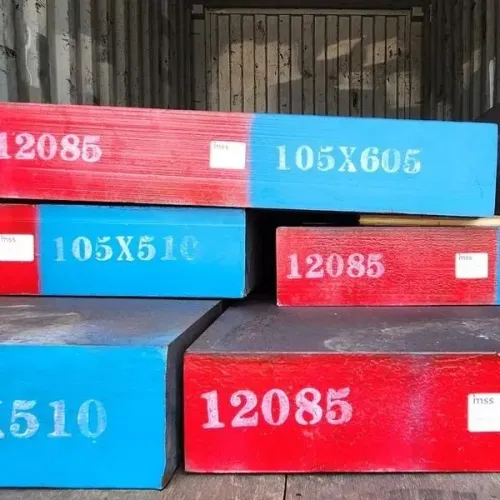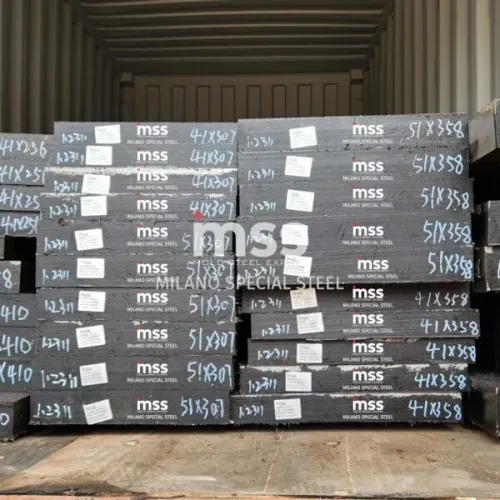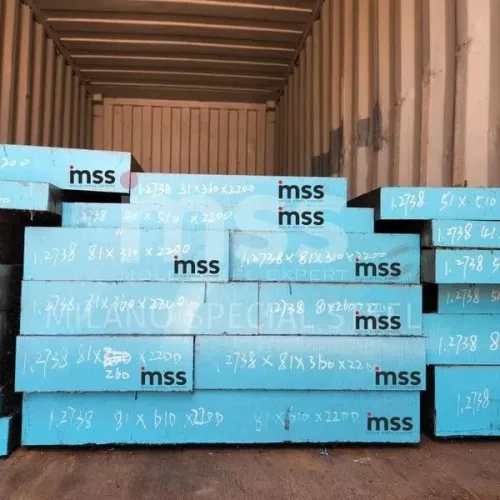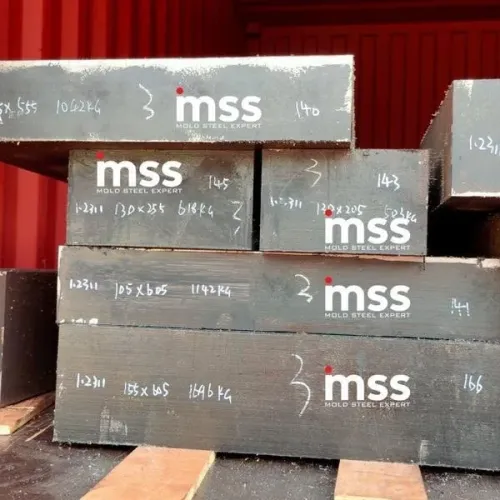
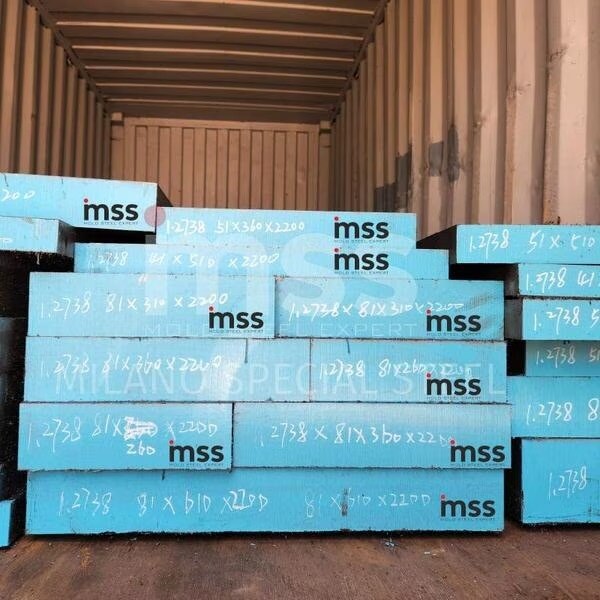
Finding a plate is easy; finding the correct grade, hardness, certificate, size, and machining condition requires a more precise buying process. By the end, you will know which NCR supply routes to contact, what to include in a quotation request, and how to verify that the delivered steel is DIN 1.2738 rather than an untraceable P20 substitute.
Key takeaways
- Search IMT Manesar, Faridabad, Bawana, and Okhla suppliers.
- Confirm DIN 1.2738 grade before comparing quotations.
- Specify dimensions, quantity, hardness, and delivery point in your RFQ.
- Request heat numbers, mill certificates, and the agreed hardness condition.
Search the wider NCR tool-steel supply network
For delivery to Gurugram, search the wider NCR industrial belt rather than only city-based stockists. Tool-steel plates commonly move from IMT Manesar, Faridabad, Bawana, and Okhla, so local delivery does not necessarily mean local inventory.
Use these supplier routes:
- Search “DIN 1.2738 supplier Gurugram” and contact stockists that cut prehardened mould steel to size.
- Check an IMT Manesar tool steel distributor serving mould makers and automotive suppliers.
- Contact a Faridabad steel supplier with plate-cutting capability and regular Gurugram transport.
- Compare Bawana and Okhla tool-steel dealers when they hold larger plates or can consolidate cutting with dispatch.
- Include a P20 plate supplier in your search, but ask whether its “P20” is DIN 1.2738, P20+Ni, or another grade.
Send every supplier the required thickness, width, length, quantity, cut dimensions, delivery address, and required machining allowance. Ask for freight, cutting charges, and dispatch lead time as separate quotation lines; otherwise a distant stockist can appear cheaper while arriving later.
Name the material as DIN W.Nr. 1.2738 and 40CrMnNiMo8-6-4, and specify approximately 280–325 HB, or 29–34 HRC, when that is your required delivery condition. Do not approve 1.2311 or 1.2312 as a substitute without design approval.
Confirm the grade before comparing prices
Do not compare prices until the quotation identifies the exact grade, nickel-bearing chemistry, and delivery hardness. Ask for DIN W.Nr. 1.2738 and 40CrMnNiMo8-6-4; “P20 plate” alone does not establish what you will receive.
1. Treat P20+Ni and 718 as market names that require confirmation. They commonly refer to DIN 1.2738, but the seller must support that claim with chemical analysis showing the specified alloy composition and an original heat number.
2. Separate DIN 1.2311 from DIN 1.2738 by chemistry, not appearance. Conventional P20 usually identifies 1.2311, while 1.2738 contains nickel for improved through-hardening and more uniform properties in thicker mould sections. Do not accept 1.2311 or 1.2312 as a substitution without design approval.
3. Check the hardness condition in the quotation. A commonly supplied 1.2738 condition is about 280–325 HB, roughly 29–34 HRC; P20 high-hard describes a harder delivery condition, not a separate proof of the 1.2738 grade. Require the method, HBW or HRC scale, measurement location, and defined readings across large plates.
4. For mirror polishing, EDM texturing, or visible cavity surfaces, request the steelmaker’s polishing and etching suitability designation. General-purpose P20 can machine well yet reveal inclusions, segregation, or uneven polish response.
The phrase “DIN 1.2311 versus DIN 1.2738” belongs in your comparison checklist, but the EN 10204 3.1 certificate decides the purchase.
Send a quotation request with production-ready details
A useful DIN 1.2738 plate quotation starts with a drawing or a complete specification, not “P20 plate, required urgently.” State the plate thickness width length, quantity, required supply condition, and whether the stock must be hot-rolled, forged, or ground/peeled.
Send these details to each Gurugram-area supplier:
- Finished component size and the required cut size and tolerance, such as ±2 mm on saw-cut dimensions.
- Machining allowance on every relevant face; do not request a plate cut exactly to the finished nominal size.
- Required flatness, surface condition, and whether mill scale, sawn edges, or ground faces are acceptable.
- Delivery hardness, such as 280–325 HB, plus the heat-treatment or supply condition required on the purchase order.
- Full plate, remnant, or mill-order preference, with the minimum usable dimensions if a remnant is offered.
- Delivery address, unloading limits, required date, and whether the quotation must include local Gurugram freight, GST, cutting, UT testing, and certificates.
Ask for the quoted weight, saw-kerf and cropping allowance, net usable weight, and separate charges. Milano Special Steel, Plastic Mold Steel Expert can be included in the same comparison only when its offer identifies these items clearly.
For CNC work, a supplier who confirms allowance and final inspection dimensions gives you a more useful price than one quoting only a per-kilogram rate.
Related product
 | DIN 1.2738 Tool Steel DIN 1.2738 Steel, P20 Steel Plates DIN 1.2738 Steel: Plastic Mould Steel Supplier in India. What is DIN 1.2738 Steel? DIN 1.2738 steel is a pre-hardened plastic mould steel with nickel... View product → |
Demand traceable documents and a defined hardness condition
Ask for an EN 10204 3.1 certificate before accepting the quotation, not after delivery. It must identify DIN 1.2738, the original heat number, chemical analysis, delivery condition, dimensions, and measured hardness. A generic mill test certificate or a document naming only “P20” does not establish the grade.
| Evidence | Acceptable record | Reject or query |
|---|---|---|
| EN 10204 3.1 certificate | Grade DIN 1.2738, heat number, chemistry, supply condition, dimensions | “P20 plate” with no grade standard or heat identification |
| Hardness | DIN 1.2738 hardness 280–325 HB, with the test standard and location recorded | Hardness stated without units, test position, or delivery condition |
| Inspection record | HBW or HRC readings at defined locations, including surface preparation | One unexplained reading from an unspecified surface |
Require the heat number to be stamped, etched, or securely transferred onto the plate or cut piece. An unmarked remnant cannot reliably be matched to its certificate after a parent plate is divided.
Specify whether hardness is verified by HBW or HRC testing; 280–325 HB is roughly 29–34 HRC, but the methods are not interchangeable without a stated conversion basis.
Put the required hardness in the purchase order and ask for a dimensional inspection report covering thickness, width, length, flatness, and cut condition. If readings differ across a large plate, request the measurement map and investigate decarburised, scaled, or locally softened areas before machining.
Compare plate condition, landed cost, and machining risk
A cheaper kilogram rate can become the costlier purchase after cutting, freight, GST, and unusable stock are included. Compare net usable weight delivered to Gurugram, not the quoted rate alone.
| Option | Cost effect | Machining risk |
|---|---|---|
| Full plate or remnant | Full plates carry more weight; remnants reduce freight and scrap when dimensions fit | Remnants may lack rolling-direction records or enough machining allowance |
| Saw-cut versus machined plate | Saw cutting costs less, but kerf, cropping, and extra stock increase machining time | Saw-cut faces need squaring; machined plate reduces setup work |
| Ground and milled tool steel | Costs more than hot-rolled or forged stock | Tighter thickness and flatter faces reduce removal and distortion risk |
Give the supplier finished dimensions and the required rough-cut size. A plate bought at nominal finished thickness leaves little room to correct saw damage, surface defects, or distortion after rough machining. Check actual thickness and flatness at receipt; a quoted size is not proof of either.
Ask whether stress relief follows rough machining or whether you will perform it. Removing substantial stock from prehardened 1.2738 can release residual stress, particularly in asymmetric mould plates, and a finish-sized plate cannot absorb that movement.
For thick sections, request the ultrasonic testing plate report, including the tested area and acceptance level. Also compare cutting charge, machining allowance, local delivery, certificate and UT charges before accepting the lowest quotation.
Frequently asked questions
Where should you search for DIN 1.2738 P20 plates near Gurugram?
Search the wider NCR tool-steel network, including suppliers in IMT Manesar, Faridabad, Bawana, and Okhla, because local delivery does not prove local inventory.
What should you confirm before comparing P20 plate prices?
Confirm that each quotation specifies DIN 1.2738 or the agreed P20 equivalent, along with plate dimensions, quantity, supply condition, and hardness.
What details should you include in a quotation request?
State the required grade, thickness, width, length, quantity, cutting needs, delivery location, deadline, hardness condition, and documentation requirements.
Which documents should you request with DIN 1.2738 plates?
Request traceable heat numbers and a mill test certificate that identifies the grade, chemical composition, mechanical results, heat-treatment condition, and hardness.
How should you compare offers beyond the quoted steel price?
Compare plate condition, cutting and machining allowance, freight to Gurugram, delivery time, documentation, and the machining risk created by hardness or internal stress.