
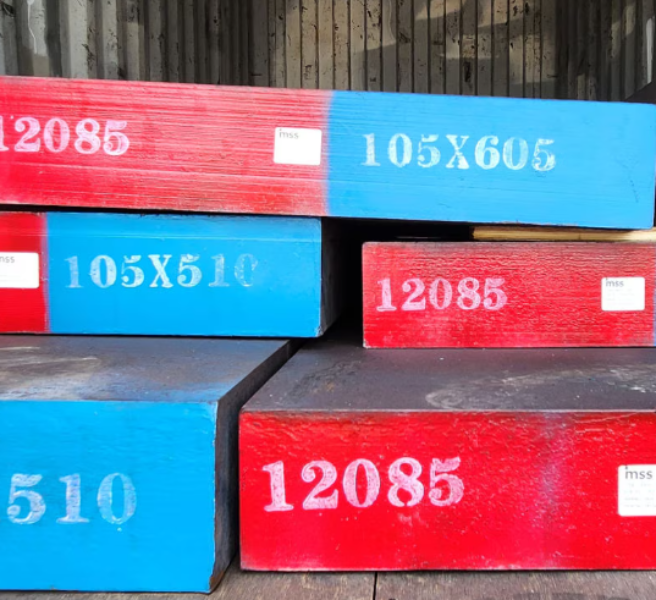
Plastic moulds used for manufacturing medical products, food packaging, cosmetic containers, and transparent components often operate in environments where corrosion resistance is just as important as hardness. In such applications, DIN 1.2085 Tool Steel has become a preferred material because it offers an excellent combination of corrosion resistance, wear resistance, and machinability.
For manufacturers in Kundli and across Haryana, understanding when to use DIN 1.2085 Tool Steel can help improve mould longevity, reduce maintenance, and maintain consistent product quality over long production cycles.
What Is DIN 1.2085 Tool Steel?
DIN 1.2085 is a chromium-alloyed stainless plastic mould steel specifically developed for moulds exposed to moisture, corrosive plastics, or humid production environments. Unlike conventional mould steels, it provides enhanced resistance to rust and corrosion while maintaining sufficient hardness for precision tooling.
The steel is widely used where mould cleanliness and surface integrity directly influence the quality of finished plastic products.
Key Characteristics of DIN 1.2085 Tool Steel
This material offers a well-balanced combination of mechanical strength and corrosion resistance.
Its major properties include:
- Excellent corrosion resistance
- Good wear resistance
- High dimensional stability
- Uniform hardness
- Good machinability
- Easy maintenance
- Reliable polishing performance
- Long operational life
These characteristics make it suitable for manufacturers seeking dependable performance without frequent mould refurbishment.
Common Industrial Applications
DIN 1.2085 Tool Steel is widely used in industries where corrosion-resistant moulds are essential.
Typical applications include:
- Medical device moulds
- Food-grade packaging moulds
- Cosmetic packaging moulds
- Pharmaceutical component moulds
- Transparent plastic product moulds
- PVC processing moulds
- Water storage product moulds
- Household appliance moulds
- Engineering plastic moulds
- Precision plastic tooling
Its corrosion-resistant properties help maintain mould quality even after prolonged production runs.
Why Corrosion Resistance Matters
Many plastics release gases or chemicals during processing that gradually attack standard mould steels. Moisture, cooling water, and factory humidity can also contribute to corrosion over time.
Using corrosion-resistant steel helps manufacturers:
- Extend mould service life
- Reduce maintenance costs
- Minimise production interruptions
- Maintain consistent surface finish
- Improve product quality
- Lower repair frequency
- Protect precision mould cavities
For high-value moulds, these advantages translate into significant long-term savings.
When Should You Choose DIN 1.2085?
This steel grade is particularly suitable when production involves:
- Corrosive plastic materials
- Humid manufacturing environments
- Medical-grade plastic products
- Food-contact applications
- High cosmetic surface finish requirements
- Long production schedules
- Moulds requiring minimal maintenance
However, for applications involving extremely high polishing requirements or superior wear resistance, alternative ESR mould steels may be considered depending on production needs.
Factors to Evaluate Before Purchasing
Selecting mould steel requires careful assessment of both technical and commercial requirements.
Industrial buyers should consider:
- Type of polymer being processed
- Production volume
- Environmental conditions
- Surface finish expectations
- Mould maintenance schedule
- Budget versus lifecycle cost
- Required machining complexity
Evaluating these factors ensures the selected material provides the best long-term value.
Best Practices for Maximising Tool Performance
Even corrosion-resistant steel performs better when supported by proper maintenance and manufacturing practices.
Recommended measures include:
- Use appropriate machining tools and cutting speeds.
- Maintain clean cooling channels.
- Perform routine mould inspections.
- Store moulds in dry, controlled environments.
- Apply protective measures during extended storage.
- Follow recommended polishing procedures.
These simple practices help preserve mould accuracy and extend operational life.
Choosing the Right Material Supplier
The performance of DIN 1.2085 Tool Steel depends heavily on material quality and consistency. Purchasing from an experienced supplier ensures manufacturers receive steel that meets international specifications.
Reliable suppliers typically provide:
- Certified material test reports
- Consistent hardness
- Precision-cut sizes
- Batch traceability
- Quality assurance documentation
- Technical guidance for material selection
- Reliable inventory for repeat orders
Consistent material quality helps reduce machining issues and supports predictable production planning.
Growing Demand in Kundli’s Manufacturing Sector
As Kundli continues to expand its automotive, medical, engineering, and plastic manufacturing industries, demand for corrosion-resistant mould steels is increasing. Manufacturers producing precision plastic components require materials that can withstand continuous production while maintaining excellent mould surfaces.
Milano Special Steel, Plastic Mold Steel Expert supplies specialised mould steel grades that support these evolving manufacturing requirements. By offering quality-controlled materials and application-specific expertise, the company helps industrial buyers select steels suited to demanding production environments.
Making the Right Investment in Mould Steel
DIN 1.2085 Tool Steel offers manufacturers a dependable solution for applications where corrosion resistance, dimensional stability, and long mould life are essential. Its ability to reduce maintenance while maintaining consistent product quality makes it a practical choice for modern plastic mould manufacturing.
For procurement managers, tool room engineers, and industrial buyers in Kundli and throughout Haryana, selecting high-quality DIN 1.2085 Tool Steel from a trusted supplier can improve production reliability, lower lifecycle costs, and ensure moulds continue to perform efficiently even under challenging operating conditions.


